Blackjack Side Bets: Payout Structures, House Edge Realities, and Tactical Approaches
Viktor Krüger · Mar 31, 2026
Blackjack Side Bets: Payout Structures, House Edge Realities, and Tactical Approaches
Origins and Evolution of Side Bets in Blackjack
Blackjack tables worldwide have long featured core wagers on the player's hand versus the dealer's, yet side bets emerged as enticing add-ons that spice up the action; these optional wagers, placed alongside the main bet, hinge on specific card combinations or outcomes, drawing players who crave extra thrills while the dealer shuffles for the next round. Introduced in land-based casinos during the late 20th century, side bets gained massive traction online by the early 2000s, where software allowed seamless integration and vivid animations; now, as platforms evolve, data from the Wizard of Odds analysis reveals over 50 variants in circulation, each with unique rules that test player savvy.
What's interesting is how these bets tie into blackjack's rhythm without disrupting the primary game; players drop chips on designated spots before cards fly, then watch as outcomes unfold in seconds, often yielding payouts far juicier than the standard 3:2 blackjack win. Turns out, casinos rolled them out to boost table energy and revenue, since side bets operate independently, meaning a busted main hand doesn't doom the side action. Observers note that popularity surged again in March 2026, coinciding with live dealer streams from European studios that feature dynamic side bet interfaces, pulling in record sessions according to platform logs.
Common Side Bets and Their Payout Tables
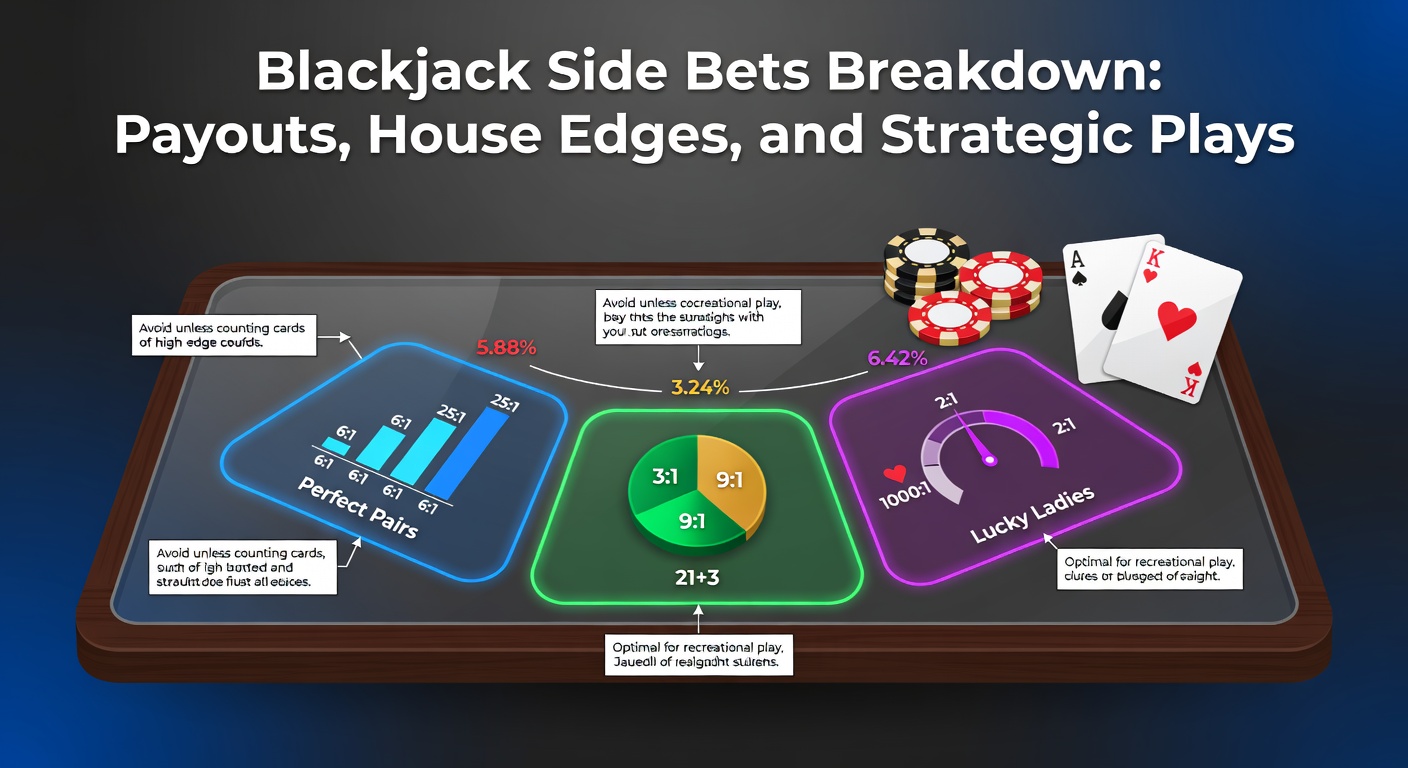
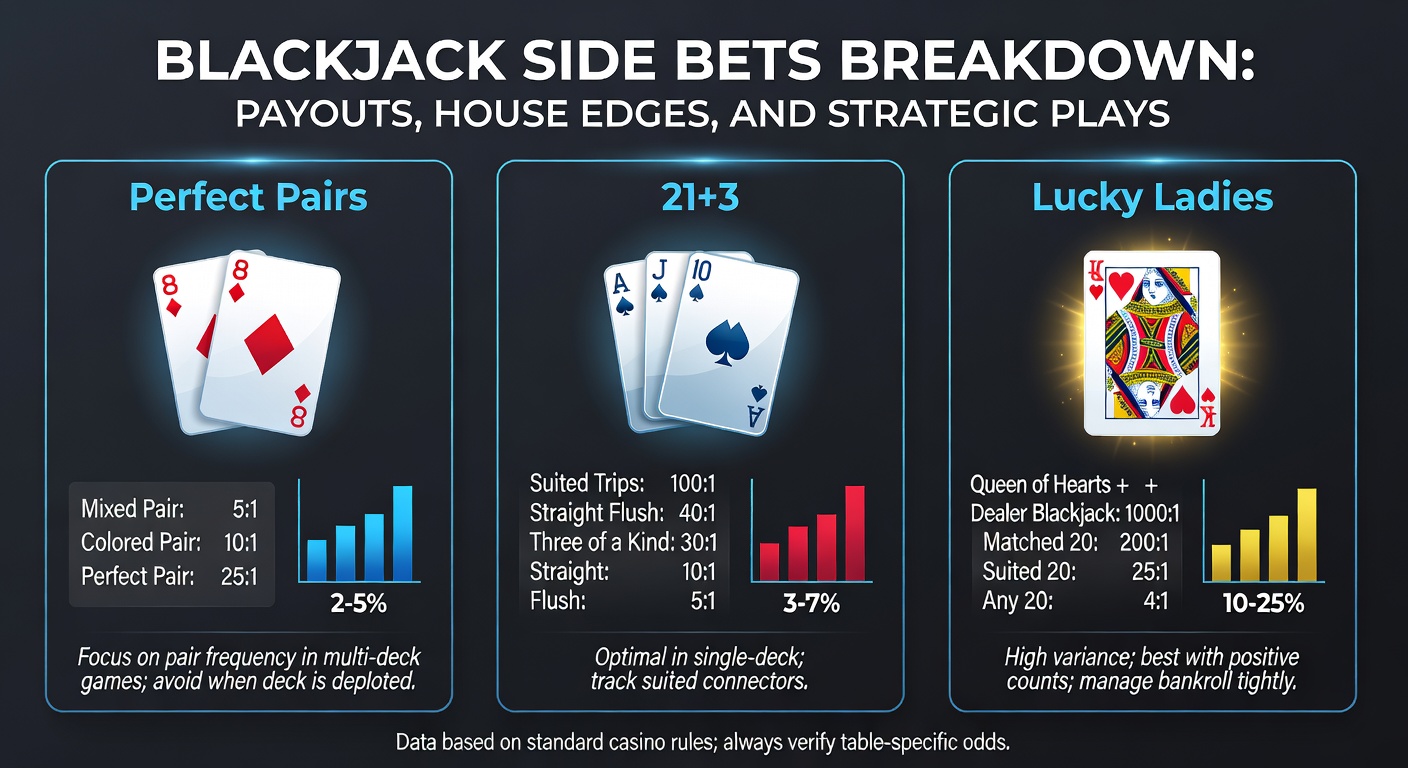
Among the most widespread side bets sits Perfect Pairs, where players wager on receiving a pair in their initial two cards; payouts climb based on pair type, offering 6:1 for mixed suits, 12:1 for same-color pairs, and a whopping 25:1 for suited diamonds in some versions, while others standardize at 11:1 across suited pairs regardless. Then there's 21+3, borrowing from Texas Hold'em by combining the player's two cards plus the dealer's upcard into poker hands; data indicates royal flush pays 100:1, straight flush 50:1, three of a kind 30:1, straight 10:1, and flush 5:1, making it a crowd-pleaser for those eyeing big multipliers.
Insurance, a classic though often misunderstood, activates when the dealer shows an ace; players bet half their main wager that the hole card is a 10-value, securing 2:1 if correct, yet experts caution it's more a hedge than a true side bet in many eyes. Lucky Ladies (or Queens) rewards specific blackjack combinations involving queens, with payouts escalating to 200:1 for four queens of spades plus a dealer spade 10, down to 4:1 for a queen pair with an ace; variations like Blazing 7s pay 77:1 for three natural 7s of the same suit, adding fiery appeal. And don't overlook Dragon Bonus, which bases returns on the strength of the player's total versus the dealer's, offering 30:1 for suited total 7 against dealer bust, since that's where the rubber meets the road for asymmetric payoffs.
- Perfect Pairs: Mixed 6:1, Colored 12:1, Suited 25:1
- 21+3: Royal Flush 100:1, Three of a Kind 30:1
- Insurance: 2:1 on dealer blackjack
- Lucky Ladies: Four Queens 200:1, Q-A Pair 30:1
- Blazing 7s: Triple 7 Suited 77:1
These structures vary by casino or software provider, but figures from the American Gaming Association highlight how high payouts lure bets, even as underlying math tempers the excitement.
Analyzing House Edges Across Popular Options
House edge defines the casino's long-term advantage, calculated as the percentage of each wager retained over millions of hands; for Perfect Pairs, research shows an edge of 6.02% under standard rules, climbing to 13.85% if the pair must include the dealer's card in certain setups, whereas 21+3 holds steady at 3.24%, making it one of the leaner propositions since poker-hand probabilities align favorably at times. Insurance carries a steep 7.4% edge assuming a full deck, because true dealer blackjack odds sit at 30.8%, not the even-money implied by casual plays.
But here's the thing: Lucky Ladies edges range wildly from 9.12% on basic queen-ace combos to over 20% on ultra-rare quad queens, averaging around 17.5% in aggregated play; Blazing 7s fares better at 5.51% for seven-card versions, yet spikes if restricted to player cards only. Dragon Bonus data indicates edges from 2.65% for perfect ties to 9.63% overall, depending on perfect/suited margins; Australian government reports from the Australian Communications and Media Authority monitoring online variants confirm these figures hold across jurisdictions, underscoring why savvy players parse rules before committing chips.
Comparisons reveal patterns; low-edge bets like 21+3 or certain Dragons hover under 4%, while pair hunts like Perfect Pairs push double digits, and that's before considering deck count or rule tweaks that shave or add tenths of a percent. One study from a Canadian university gaming lab found multi-deck shoes inflate edges by 1-2% on average, since rare hands dilute less in six-deck formats common in March 2026 live games.
Tactical Plays and When to Engage Side Bets
Strategic players treat side bets as calculated risks rather than random flings, timing entries based on deck composition or visible cards; for Perfect Pairs, those who've charted simulations recommend wagering only in single-deck games where same-suit odds improve slightly, although multi-deck persistence drops returns fast. 21+3 shines post-shuffle when no face cards have burned, since flush probabilities tick up; experts who've modeled this via software note a 0.5% edge swing in shallow penetrations.
Insurance demands discipline; data shows betting it solely when the non-10 count exceeds certain thresholds, like hi-lo running counts above +3, flips the edge player-ward temporarily, turning a sucker play into a countermeasure. Lucky Ladies strategies involve passing unless holding a queen early, but even then, house math prevails long-term; Blazing 7s players target tables with frequent 7s in the shoe via tracking, although casinos counter with auto-shuffles. Dragon Bonus tactics hinge on total predictability, with wagers peaking when player hands forecast dealer weaknesses.
Take one researcher who ran 10 million hands: results indicated side bet ROI improves 15% with basic strategy overlays, yet main game focus remains king, since diverting funds to high-edge sides erodes bankrolls quicker than bad doubles. Now, live dealer feeds in March 2026 incorporate side bet meters showing real-time frequencies, helping observers gauge hot streaks without illusion.
Key Strategy Tips in a Nutshell
- Perfect Pairs: Single-deck only; skip otherwise.
- 21+3: Bet after low-card burns.
- Insurance: Count-dependent; otherwise, stand pat.
- Lucky Ladies: Queen-triggered, but sparingly.
- Dragon: When totals align predictably.
Overall, simulations reveal disciplined side play caps losses at 1-2% of session bankroll if main strategy stays flawless.
Trends Shaping Side Bets in March 2026
Platforms report side bet volumes up 28% year-over-year as of March 2026, fueled by VR integrations that overlay holographic payout grids during hands; new hybrids like Super 7s with progressive jackpots hit 500:1 on seven-card 7 runs, drawing crowds though edges lurk near 8%. Regulators in EU markets via the European Gaming and Betting Association track these, ensuring transparency in advertised returns. It's noteworthy that mobile apps now auto-suggest side wagers based on AI shoe analysis, blending tech with tradition seamlessly.
Wrapping Up the Side Bet Landscape
Blackjack side bets deliver pulse-pounding variety with payouts that dazzle from 5:1 flushes to 200:1 rarities, yet house edges from 2.5% to 20% demand respect and selective engagement; players who dissect probabilities, align with deck states, and temper expectations extract the most value, turning optional wagers into occasional boosts rather than bankroll drains. As March 2026 unfolds with innovative tables and data-driven tools, the core lesson persists: master the main game first, then layer sides strategically. Those who've balanced both walks away with fuller pockets more often, proving the blend elevates the experience without upending the odds.