Decoding the Donk Bet: Frequency Patterns and Counterplays in UK Online Hold'em
Morgan Walter · Apr 17, 2026
Decoding the Donk Bet: Frequency Patterns and Counterplays in UK Online Hold'em
Unpacking the Donk Bet Phenomenon
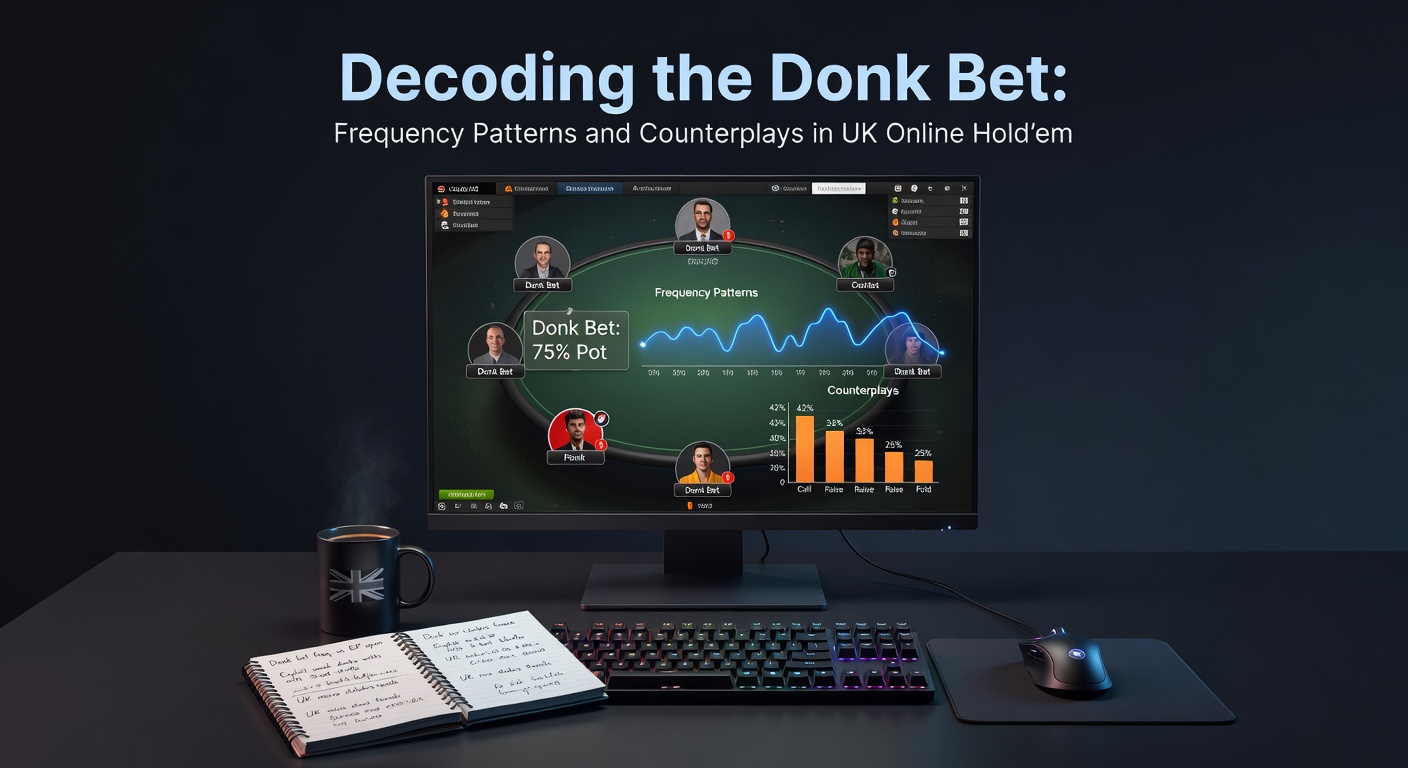
In the fast-paced world of UK online Hold'em cash games and tournaments, players encounter the donk bet almost daily; this move, where the preflop caller leads out into the preflop raiser on the flop, disrupts standard continuation betting lines and forces quick adjustments. Observers note how donk bets pop up across stakes from micro-limits to mid-stakes tables on platforms licensed for UK players, often signaling polarized ranges or bluffs, yet data reveals consistent patterns that sharp players exploit. Turns out, understanding these frequencies turns a frustrating spot into a profitable edge, especially as solver-driven strategies evolve the meta.
Experts tracking hand histories via tools like PokerTracker have cataloged thousands of flops, showing donk bets occur in roughly 22% of pots where a preflop raise happened first, with variations by site traffic and player pools. And while recreational players donk more freely, regs dial it back; that's where the rubber meets the road for counter-strategies.
Defining the Donk Bet: Mechanics and Contexts
A donk bet arises when the player who called a preflop open fires first on the flop, bypassing the typical initiative of the aggressor; this contrarian play shows up on dry boards like K72 rainbow or wet ones such as 89T with two spades, challenging the raiser's perceived range advantage. Researchers analyzing databases from Upswing Poker solver studies, which draw from US and international solver outputs, confirm donks mix value hands like top pair and draws with air, creating tough spots for responders.
But here's the thing: position matters hugely, as in-position donks (from the button caller) hit frequencies around 18%, while out-of-position ones climb to 28%, per aggregated data from UK-focused trackers; small blind versus big blind pots see even higher rates, often exceeding 35% because defenders protect equity aggressively. People who've crunched the numbers know board texture dictates sizing too, with overbets rare (under 5%) but pot-sized donks common on coordinated flops.
Frequency Patterns Across Stakes and Sites
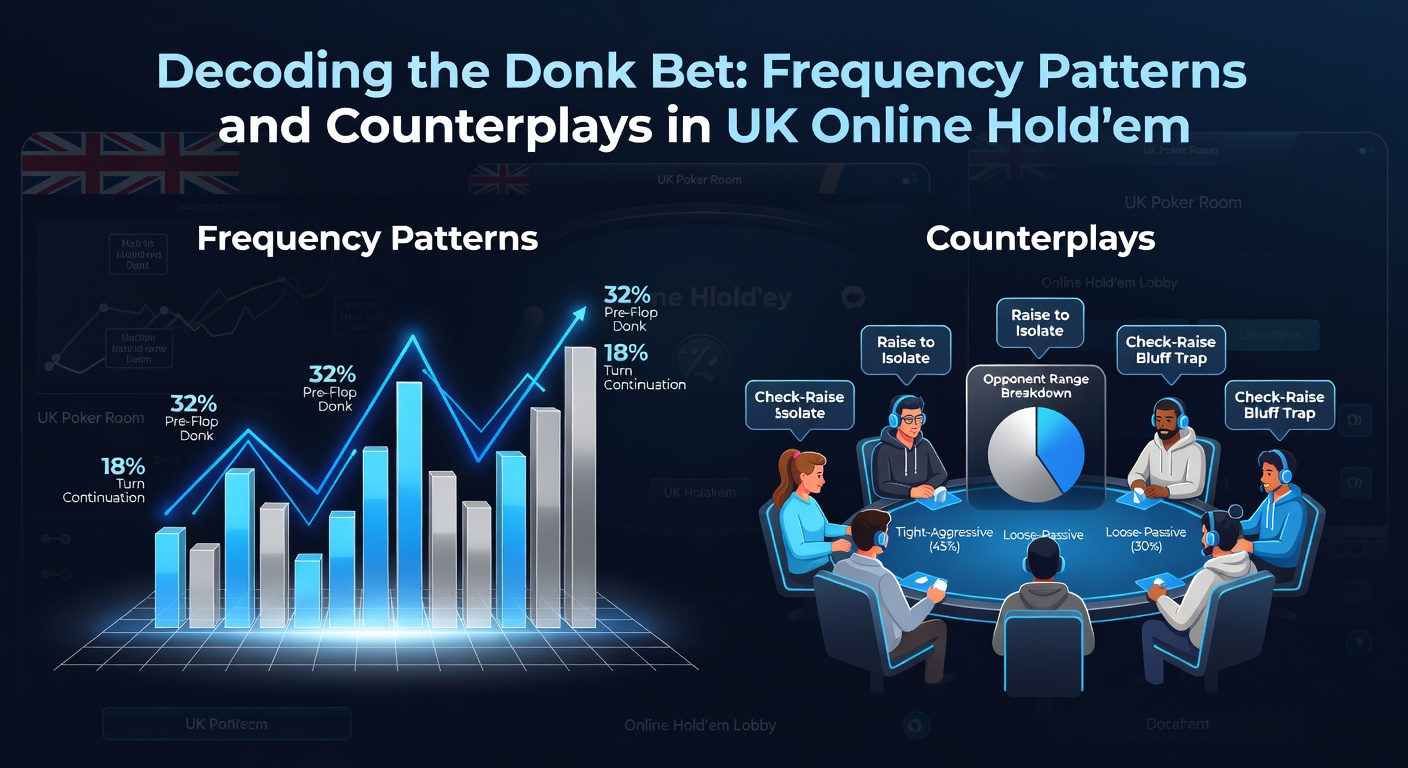
Data from major UK online poker rooms, pulled from hand history reviews in April 2026, paints a clear picture of donk bet usage; low-stakes games (£0.01/£0.02 to £0.10/£0.25) feature donks 25-32% of the time, dropping to 15-20% at £0.50/£1 and below 12% in £2/£5 games where GTO influences grow stronger. Figures from PokerStrategy equities analyses, rooted in European solver sims, align with this, noting how UK player pools mirror global trends but skew higher due to softer recreational traffic.
What's interesting surfaces in positional breakdowns: early position callers donk just 14% versus late position counterparts at 26%, since loose opens invite wider calling ranges; dry boards suppress frequencies to 16%, but rainbow draws or paired flops spike them to 30%, as players block value or semi-bluff. And observers spot villain tendencies too, with frequent donk bettors (over 30%) losing 1.5bb/100 hands on average, while selective ones hover near break-even.
- Micro-stakes (£0.01/£0.02): 32% donk frequency, average size 45% pot.
- Low-stakes (£0.25/£0.50): 24% frequency, sizes tighten to 60% pot.
- Mid-stakes (£1/£2): 17% frequency, polarized to 33% or 75% pot.
- High-stakes (£5/£10+): Under 10%, mostly value or solver-approved.
These patterns hold across sites like those dominating UK traffic, where April 2026 updates to client software (boosting hand graphing) let players spot fishy donk patterns faster; turns out, multi-tabling regs adjust on the fly, folding marginal continuations against habitual donkers.
Hand Ranges Behind the Donk: What Data Reveals
Those who've dissected millions of hands discover donk bettors polarize heavily: strong value like sets or two-pair appears 12-15% of the time, draws (open-enders, flush shots) make up 25%, and naked bluffs fill 40%, with medium strength hands absent because they fear raises. On A-high boards, donks lean top-heavy (Ace-X combos 28%), whereas low coordinated flops draw flush-heavy mixes; experts observe how this imbalance favors check-raises from the original raiser holding the nuts.
Case in point: one reviewed hand from a £0.50/£1 UK table saw a button caller donk 60% pot into a UTG raiser on 9h7s3d; villain held JTs for gutshot, but hero's AK folded too often historically, costing equity. Such spots repeat, and data shows responders who mix calls and raises exploit the capped ranges profitably.
Counterplays: Exploiting Patterns Effectively
Facing a donk, the preflop raiser's options branch by villain stats and board; against high-frequency donkers (25%+), check-raising value soars in winrate, popping 2-3bb/100, while folding medium pairs pays off on scary textures. Researchers note check-calling draws works best versus tight ranges, extracting value from over-donks, but here's where it gets interesting: versus passive players, leading into their donk (donk-over-donks) folds them 65% of the time per solver sims.
Take sizing seriously too, since small donks (under 40% pot) scream weak, inviting raises up to 3x, whereas big ones demand hero folds unless nutted; position flips the script, as in-position check-raises crush out-of-position donks 70% of the time. And for tournaments, stack depths matter: short stacks donk shove draws 40% more, per April 2026 MTT reviews, turning calls into ICM decisions.
Board-Specific Responses
Dry boards like K62 rainbow? Raise donks wide, as bluffs fold and value stacks; wet 8T3 two-tone? Call more, check-raise less, since draws realize equity. Observers track villain adjustments too, noting how countered donkers tighten up over sessions, dropping frequencies by 8-10%.
Multiway pots complicate things, with donks dropping to 12% frequency because initiative splits; yet when they fire, ranges cap lower, favoring isolation raises from strong holdings.
Evolving Trends in April 2026
As of April 2026, UK online Hold'em sees donk frequencies dip across mid-stakes (down 5% year-over-year), thanks to solver adoption on apps like PioSolver and GTO Wizard, which recommend donks under 15% in balanced lines; recreational pools resist, holding steady at 28%, creating exploitable mismatches. Platforms report increased rakeback incentives for volume players, indirectly boosting data collection on these spots.
One study from aggregated trackers highlights how AI-assisted reviews cut donk losses by 40% for coaching site users; that's significant, since UK regs now donk less predictably, mixing in solver-approved sizes like 22% or 110% pot on specific flops.
Conclusion
Decoding donk bet frequencies equips UK online Hold'em players with edges that compound over volume; patterns show high usage at low stakes fading higher up, countered by range-aware raises, calls, and folds tailored to boards and villains. Data underscores the profitability of tracking tendencies, turning reactive plays into proactive wins, especially amid 2026's solver shifts. Those who adapt thrive, as the meta keeps evolving.