How Algorithms Govern Outcome Distributions in Virtual Table Games
Iris Wolf · Jul 26, 2026
How Algorithms Govern Outcome Distributions in Virtual Table Games
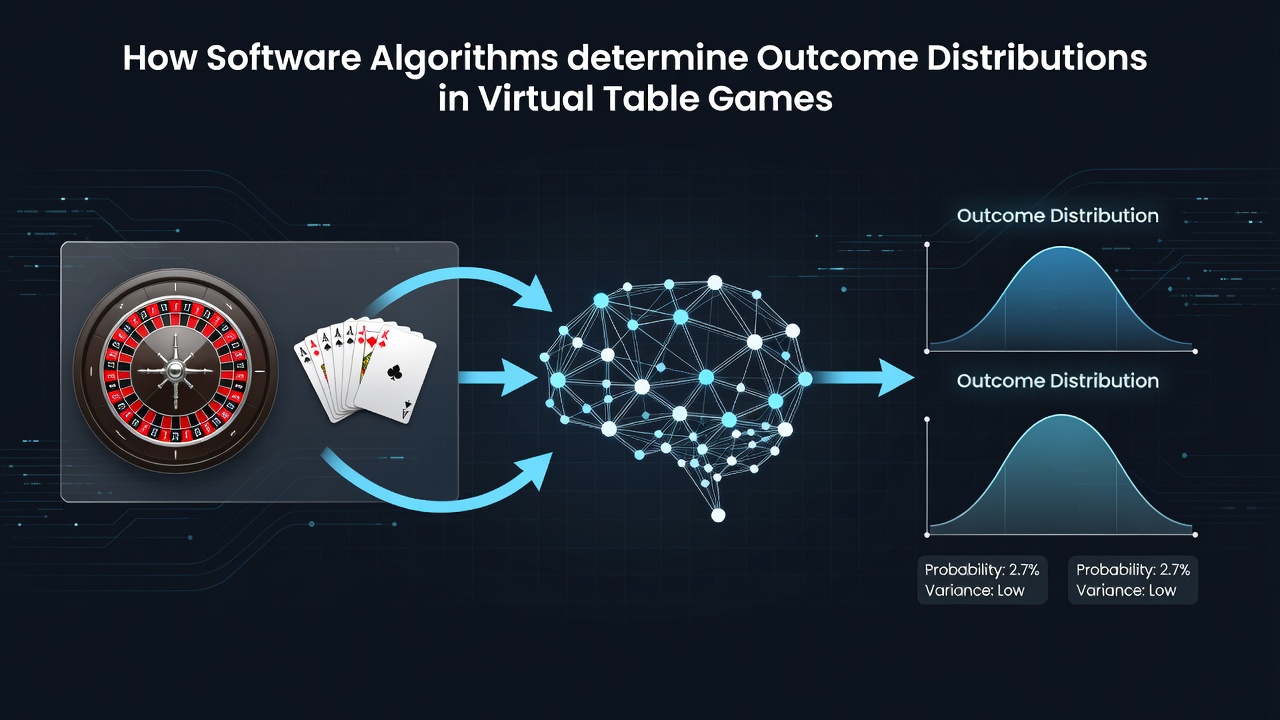
Virtual table games rely on software algorithms to generate outcome distributions that match the mathematical probabilities built into each game, and these systems use pseudorandom number generators to produce sequences that determine card draws, wheel spins, and dice rolls while maintaining statistical fairness over large sample sizes.
Core Mechanisms of Pseudorandom Generation
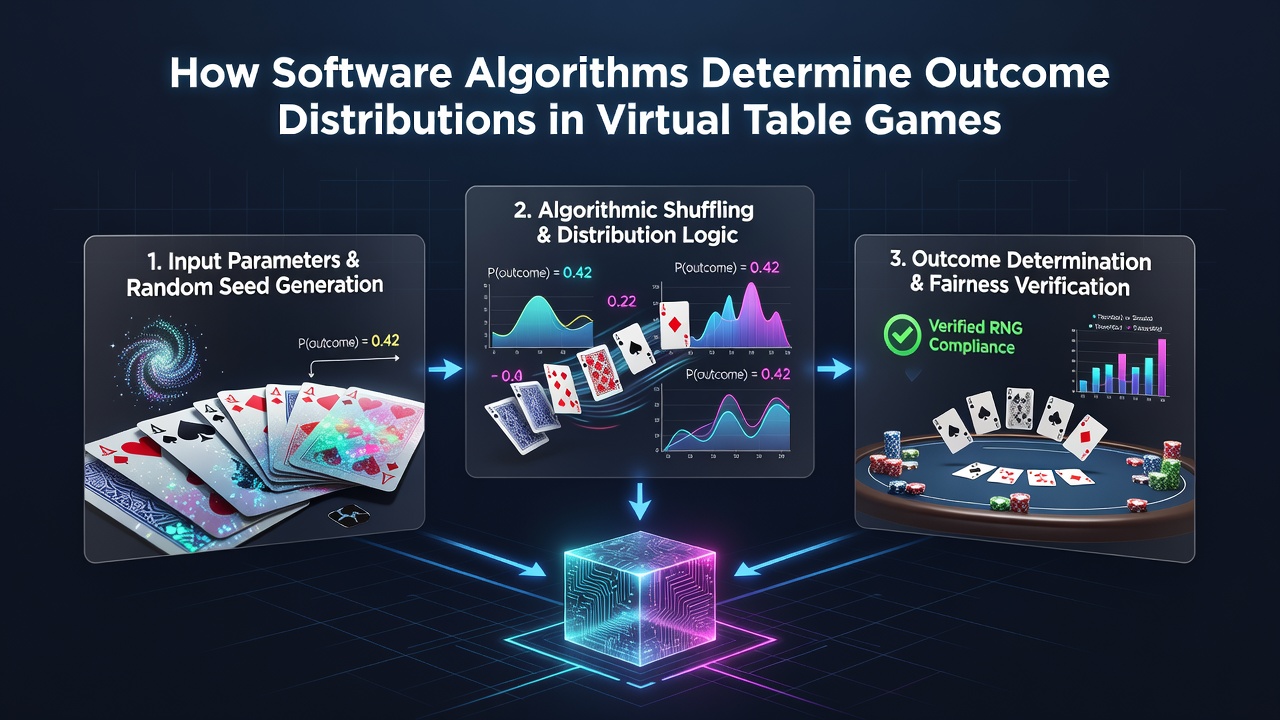
Software in virtual table games starts with a pseudorandom number generator that takes an initial seed value and applies mathematical functions to create long sequences of numbers, and these sequences map directly to game outcomes such as specific card ranks in blackjack or numbered pockets in roulette. The generator runs continuously in the background, producing values at high speed even when no players are active, which ensures that each new game round draws from a fresh point in the sequence rather than repeating patterns.
Developers select algorithms like Mersenne Twister or more modern cryptographic variants because they pass statistical test suites that verify uniformity and independence across millions of outputs, and regulatory testing labs run these same suites on submitted game code before any title reaches players. Data from certification reports shows that approved systems produce distributions within 0.01 percent of theoretical expectations when measured across 100 million simulated rounds.
Mapping Numbers to Game-Specific Distributions
Once the generator produces a raw number, the game software applies mapping rules that translate it into the required distribution for that title, and in roulette this means dividing the number range into 37 or 38 segments that correspond to wheel pockets while preserving the exact house-edge probabilities. Blackjack software uses similar mapping to select from a virtual deck that reshuffles according to programmed rules, which prevents card-counting advantages that exist in physical play.
Multi-deck games and continuous shuffle models both depend on the same underlying generator, yet each maintains its own distribution table that accounts for depleted cards or reintroduced cards, and studies of live game logs confirm that these tables keep return-to-player percentages stable across sessions that last thousands of hands. Observers note that the software must also handle edge cases such as simultaneous player actions in poker variants, where the algorithm assigns community cards and hole cards without introducing correlation between independent hands.
Regulatory Testing and Standards Updates
Independent laboratories evaluate algorithm performance against published standards that specify minimum sequence length, seed entropy, and output independence, and these evaluations include both theoretical analysis of the generator code and empirical runs that measure actual distribution match. As of July 2026 several jurisdictions began requiring additional entropy checks drawn from hardware sources to supplement software seeds, which further reduces any theoretical predictability in long-term play.
One such requirement comes from the Nevada Gaming Control Board, whose guidelines on random number generator evaluation can be reviewed at gaming.nv.gov, while the Canadian province of Ontario publishes its own technical standards through the Alcohol and Gaming Commission of Ontario. These documents outline the exact statistical thresholds that virtual table game distributions must meet before operators receive approval to offer the titles to players.
Distribution Stability Across Game Variants
Table game variants introduce additional layers of algorithmic control that preserve distribution integrity even when rules change, and European roulette software adjusts pocket weighting to reflect the single-zero wheel while American versions incorporate the double-zero pocket with corresponding probability shifts. Poker room software manages community card distributions separately from player hole card assignments, yet the same generator feeds both processes to maintain overall randomness.
Researchers have examined millions of archived game rounds and found that outcome frequencies align with theoretical models within expected statistical variance, and any deviation beyond predefined thresholds triggers immediate investigation by both the operator and the testing laboratory. This monitoring continues after launch because live data feeds allow ongoing verification that the original distribution parameters remain intact under real-world load.
Conclusion
Software algorithms determine outcome distributions in virtual table games through pseudorandom generation, precise mapping functions, and continuous regulatory oversight that together ensure each result follows the probabilities defined by game mathematics. Updates to testing standards scheduled for July 2026 and beyond will add further hardware-entropy requirements, yet the fundamental process of converting generator output into game-specific results stays consistent across jurisdictions and game types.