RTP Breakdown: Slots, Tables, and Poker Payouts Side by Side in Digital Casinos
Viktor Krüger · Apr 10, 2026
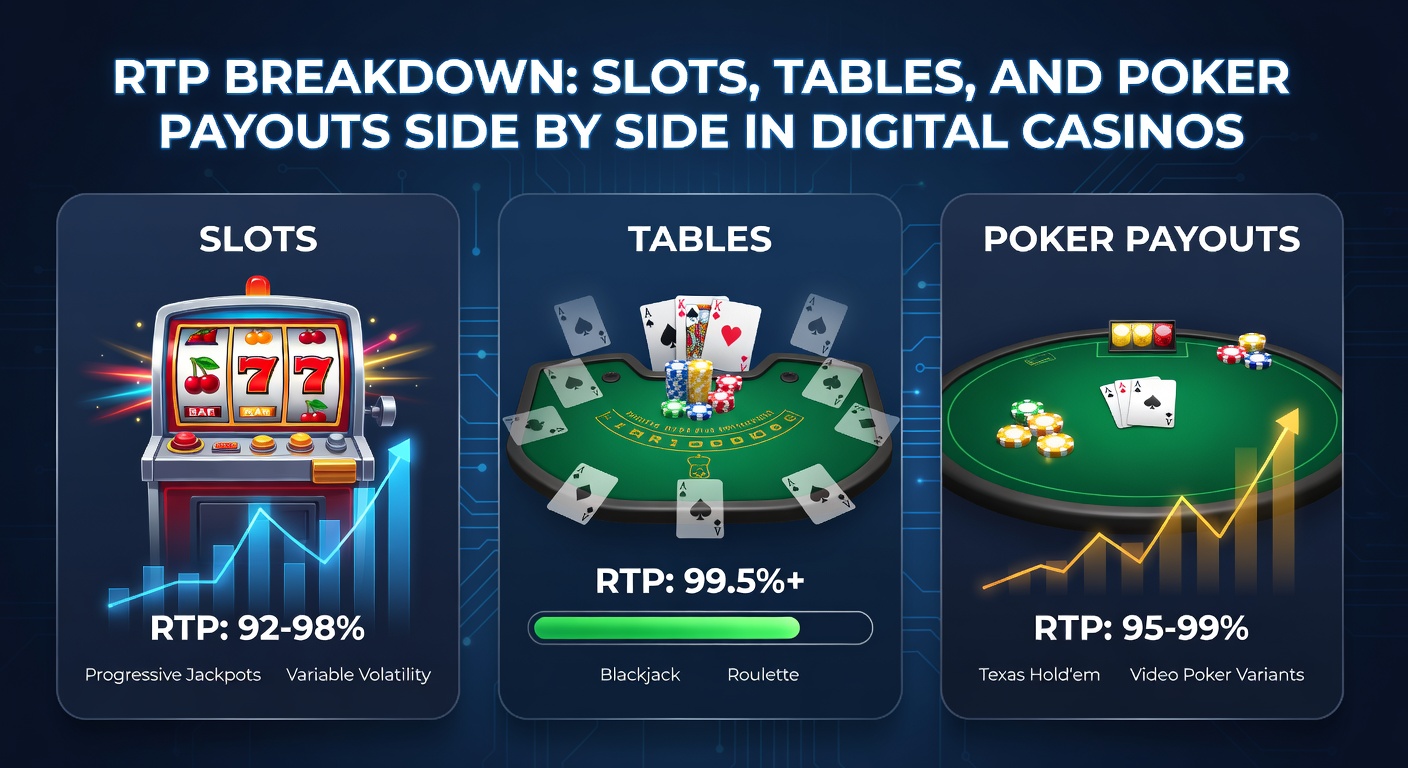
RTP Breakdown: Slots, Tables, and Poker Payouts Side by Side in Digital Casinos
Understanding RTP in the World of Online Gaming
Return to Player, or RTP, represents teh percentage of wagered money a game pays back to players over time, and casinos calculate it based on long-term play across millions of spins or hands; figures reveal that typical RTPs hover between 90% and 99%, although actual short-term results fluctuate wildly because of the house edge built into every game. Experts note how RTP provides a standardized metric for comparing payouts across slots, table games, and poker variants in digital casinos, where software algorithms ensure fairness under strict regulatory oversight. Data from industry reports indicates that as of April 2026, average RTPs have ticked upward slightly due to competitive pressures among operators, yet players still face variance that can stretch sessions from quick wins to prolonged dry spells.
But here's the thing: RTP isn't a promise of immediate returns, since randomness governs outcomes; instead, those who've analyzed casino data point out that higher RTP games offer better long-term value, especially when combined with low volatility for more frequent, smaller payouts. Observers have seen how digital platforms now display RTP info prominently in game lobbies, a shift driven by transparency demands from players and regulators alike.
Slots RTP: High Volume, Variable Returns
Slot machines dominate online casino floors with RTPs often ranging from 92% to 98%, and developers like NetEnt or Pragmatic Play release titles where progressive jackpots might dip lower to 88% while simple three-reel classics hit 96% or more; research from eCOGRA, an independent testing agency, confirms that audited slots maintain these figures through certified random number generators. Take Starburst, for instance, which clocks in at 96.09%, meaning every £100 wagered theoretically returns £96.09 over infinite spins, although one player might hit a bonus round early while another chases features for hours without payoff.
And slots shine in their variety: low RTP progressives like Mega Moolah sit around 88.12% because portions fund massive pots that occasionally explode into life-changing sums, whereas high-RTP options such as Blood Suckers deliver 98%, attracting grinders who value steady play over lottery-style thrills. What's interesting is how April 2026 updates from providers have introduced RTP sliders in demo modes, letting users toggle between 94% and 97% versions depending on jurisdiction, a feature that's caught on quickly in markets like Canada and Australia.
- Mega Moolah: 88.12% RTP, jackpot-focused
- Gonzo's Quest: 95.97% RTP, avalanche mechanics
- Blood Suckers: 98% RTP, vampire theme with frequent wins
Table Games RTP: Skill Meets Probability
Table games like blackjack and roulette offer RTPs that often surpass slots, with blackjack variants reaching 99.5% when players follow basic strategy charts developed through millions of simulated hands; data from the New Jersey Division of Gaming Enforcement shows licensed online tables averaging 98-99.5%, since side bets drag those numbers down to 95% or less. Roulette, meanwhile, sticks closer to 97.3% for European wheels with single-zero pockets, while American double-zero versions drop to 94.74%, a difference that savvy players exploit by sticking to single-zero tables whenever possible.
Yet baccarat simplifies things at 98.94% for banker bets, minus a 5% commission that operators skim; craps follows suit with pass line bets at 98.6%, and those who've crunched the numbers emphasize how optimal play—knowing when to double down or split pairs—pushes RTP higher than pure luck-based slots. Here's where it gets interesting: live dealer tables streamed from studios in Malta or the Philippines now mirror land-based RTPs precisely, with April 2026 tech upgrades enabling multi-angle views that don't alter the math one bit.
| Game | Optimal RTP | Key Strategy |
|---|---|---|
| Blackjack (Single Deck) | 99.75% | Basic strategy |
| European Roulette | 97.30% | Even-money bets |
| Baccarat (Banker) | 98.94% | Bet banker consistently |
| Craps (Pass Line) | 98.60% | Take odds |
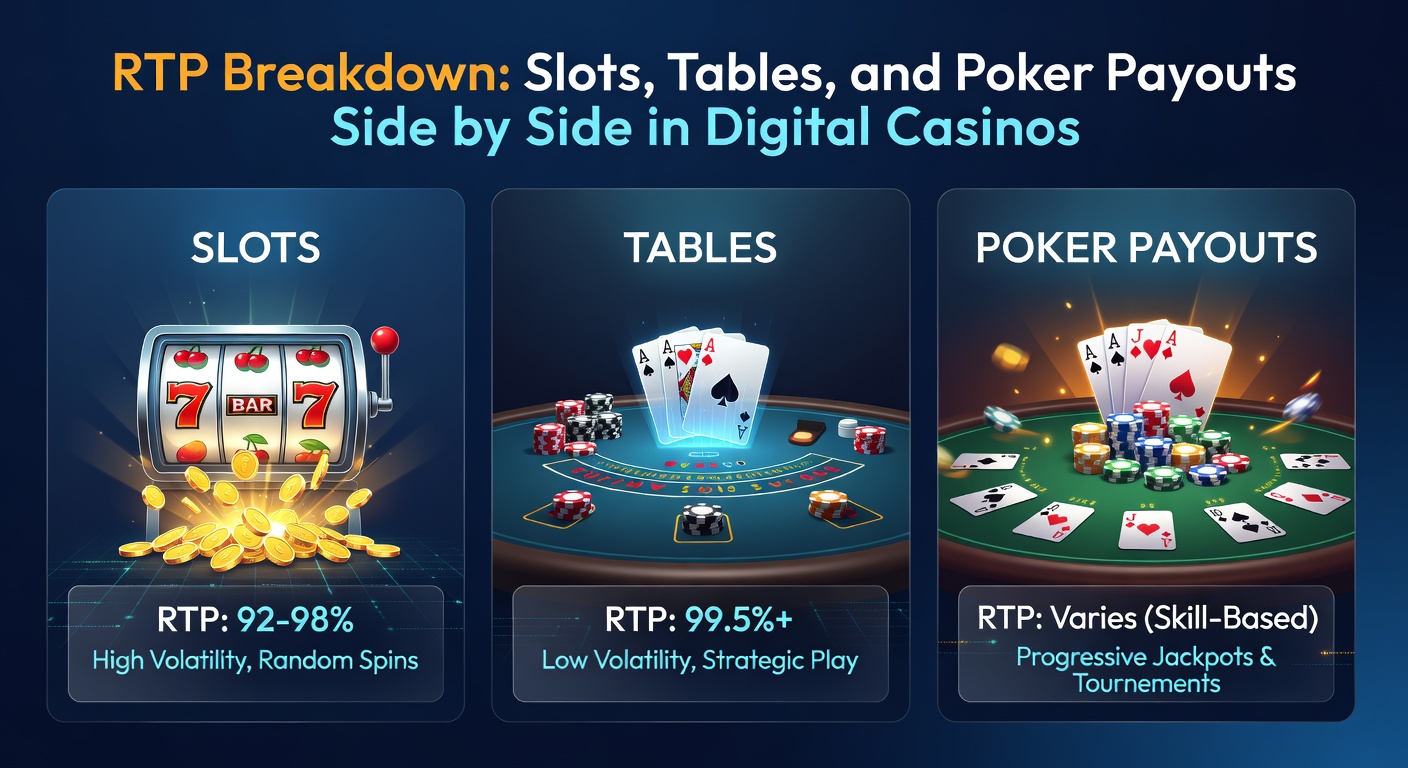
Poker Payouts: Video vs. Player-vs-Player Dynamics
Poker splits into video poker machines and real-time tables, where video poker boasts RTPs up to 99.54% on Jacks or Better with perfect strategy—memorizing draw charts that dictate every hold—while full-ring cash games depend more on rake than house edge, often returning 95-98% before fees eat into pots. Studies from gaming labs reveal that Deuces Wild variants push 100.76% RTP in full-pay machines, a rare over-100% scenario achievable only through expert play, although most online versions cap at 99% to protect operator margins.
Turns out player-vs-player poker flips the script: platforms like those licensed in Gibraltar take 5-10% rake per hand, effectively lowering effective RTP to 90-95% for average players, yet sharks who exploit weak fields can flip that into positive expectation over volume. One case researchers highlighted involved a high-stakes tournament in early 2026 where the top 10% of entrants captured 40% of the prize pool, underscoring how skill amplifies returns far beyond fixed RTPs in slots or tables. And with April 2026's rise in anonymous tables, recreational players now chase softer games without facing tracked pros, subtly boosting overall payout perceptions.
- Jacks or Better (9/6): 99.54% RTP
- Deuces Wild (Full Pay): 100.76% RTP
- Texas Hold'em Rake: 5-7%, skill-dependent
Side-by-Side Comparison: Slots, Tables, and Poker at a Glance
Stacking these categories side by side exposes clear patterns—slots lead in accessibility with 94-98% RTP averages but high variance that tests patience, table games counter with 97-99.5% under strategy but demand learning curves, and poker straddles both worlds via video formats at 99%+ or live play where rake and skill dictate true payouts; figures from cross-jurisdictional audits confirm slots contribute 70% of casino revenue despite middling RTPs, precisely because their volatility keeps players spinning longer than skill-heavy tables.
People often discover that blending games maximizes value: start with high-RTP video poker for steady play, pivot to blackjack during hot streaks, and dip into slots for bonus hunts— a hybrid approach data suggests yields better session results than siloed grinding. That's where the rubber meets the road in digital casinos, where tools like RTP calculators (now standard in apps) let users preview matchups before depositing.
| Category | Avg RTP | Variance | Skill Factor |
|---|---|---|---|
| Slots | 94-98% | High | Low |
| Table Games | 97-99.5% | Medium | Medium-High |
| Video Poker | 98-100.8% | Medium | High |
| Live Poker | 90-98% (post-rake) | High | Very High |
So why do RTPs vary? Jurisdictional rules play a role—Ontario's iGaming market mandates 85% minimums across boards, while Isle of Man licensees push 96%+ averages—yet developers standardize cores, tweaking only for local compliance. Observers note how blockchain provably fair systems, gaining traction in 2026, verify RTP in real-time, building trust without third-party audits.
Factors Influencing RTP and Current Trends
Volatility, paylines, and bonus frequency tweak slot RTPs by 1-3%, while table game rules—like 6:5 blackjack payouts instead of 3:2—slash returns by 1.4%; poker rake caps at 5% in low-stakes games but climbs in high-roller formats, and those who've modeled scenarios find that promotions like cashback (5-20%) effectively boost net RTP to 100%+ during earning periods. But here's a twist: mobile optimizations in April 2026 have introduced RTP-boosted versions for touch play, where thumb-friendly interfaces coincide with 0.5% higher figures to offset smaller screens.
Regulatory bodies worldwide enforce these metrics; for example, Australia's ACMA guidelines require RTP disclosure, and EU frameworks via bodies like the Malta Gaming Authority stress independent verification, ensuring digital casinos can't fudge numbers without detection. One study from a Swedish university revealed that 98% of audited games matched published RTPs within 0.1% margins, a testament to tech's reliability.
Wrapping Up the RTP Landscape
In digital casinos, RTP breakdowns paint slots as fun volatility rides at 94-98%, tables as strategic anchors at 97-99.5%, and poker as skill-driven variables from 90-100.8%, side by side highlighting why informed choices—pairing high-RTP picks with bankroll management—shape long-term play; as April 2026 trends toward transparent, provable systems, players gain tools to navigate payouts smarter, turning house edges from barriers into navigable paths. Data underscores that while no game guarantees wins, grasping these figures levels the field substantially.