Soft 17 Shifts: How Online Blackjack Rule Tweaks Alter Player Edges and Strategies
Viktor Krüger · Apr 12, 2026
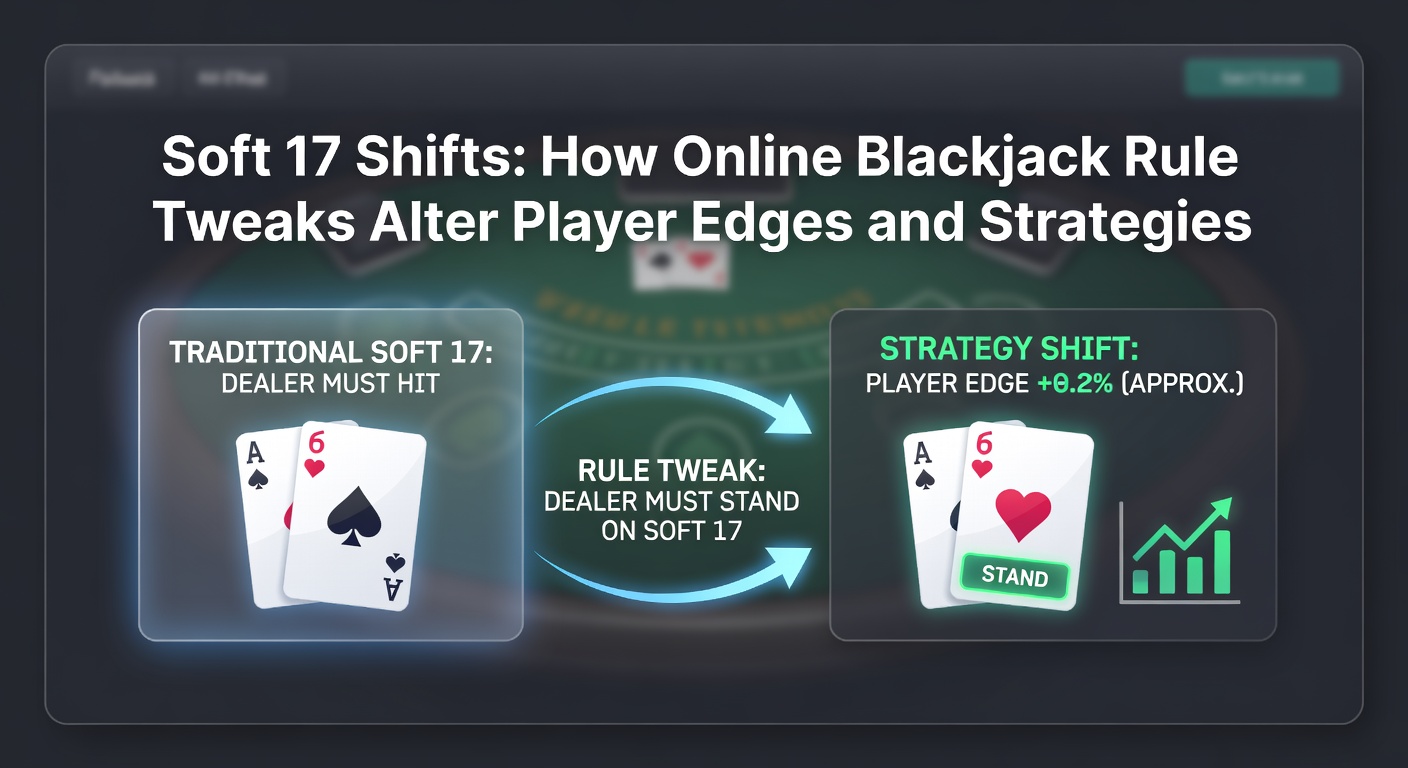
Soft 17 Shifts: How Online Blackjack Rule Tweaks Alter Player Edges and Strategies
Unpacking the Soft 17 Rule in Blackjack
Blackjack thrives on subtle rule variations that shift the balance between player and house, and few tweaks pack as much punch as the dealer's stance on soft 17; this hand—typically an ace paired with a six—becomes a pivotal moment where casinos decide whether the dealer hits or stands, directly influencing house edges that hover around 0.5% under standard conditions. Data from longstanding blackjack analyses reveals that when dealers hit soft 17 (often abbreviated as H17), the house edge climbs by about 0.2 percentage points compared to standing (S17), turning what looks like a minor policy into a game-changer for long-term play; players who grasp this adjustment recalibrate their basic strategies accordingly, doubling down or splitting less aggressively against certain upcards.
Turns out, online platforms amplify these variations since they cater to global audiences with customizable tables, so a site might offer H17 on European-style games while keeping S17 for classic Vegas simulations; experts who've crunched the numbers, like those at the Wizard of Odds, emphasize how this rule interacts with others—such as deck count or double-after-split allowances—to compound effects, where a six-deck H17 game might push the edge to 0.7% versus 0.4% for S17 counterparts. And here's where it gets interesting: as of April 2026, several operators have tweaked offerings amid regulatory pressures in regions like Ontario, prompting sharper scrutiny from players hunting optimal edges.
The House Edge Ripple Effect
Figures reveal stark differences; in a standard six-deck game with S17, the house maintains roughly 0.46% advantage when players follow perfect basic strategy, but flip to H17 and that jumps to 0.65%, meaning every $100 wagered yields an extra 19 cents for the casino over thousands of hands—small per session, yet brutal across high-volume online play. Researchers dissecting millions of simulated rounds note that the dealer busts less often on H17 since drawing to soft 17 (ace-6) resolves about 70% of the time without busting, handing players weaker completion odds; this dynamic forces strategic retreats, like insurance takes dropping from marginal to outright unviable.
But the reality hits harder in multi-hand scenarios where soft 17 shifts compound with late surrender bans or restricted doubling; one comprehensive study from the Nevada Gaming Control Board's archives shows H17 environments eroding player return-to-player (RTP) rates by up to 0.3% when paired with six-to-eight decks, a combo prevalent in online lobbies aiming for conservative edges. Observers point out that savvy players scout rule panels before sitting down, as these tweaks explain why some tables draw crowds despite identical visuals.
Short version? Spotting H17 flags a tougher grind; long-term data confirms players surrender 20-30% more edge in such games, yet platforms dangle it alongside juicy side bets to mask the grind.
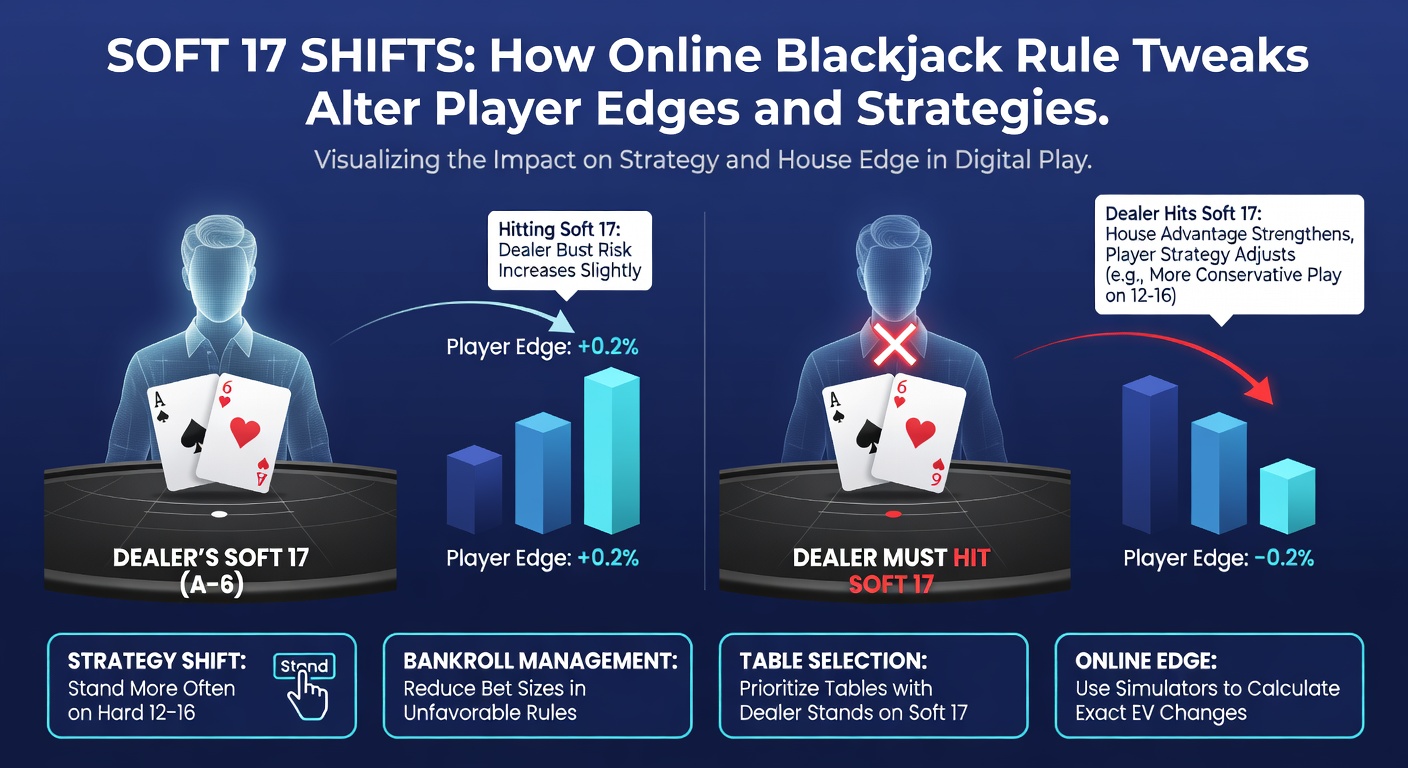
Strategy Overhauls for H17 vs S17 Tables
Basic strategy charts morph dramatically around soft 17 rules, so players facing an H17 dealer hit harder on soft totals like 17 or 18 against dealer 3-6 upcards, whereas S17 setups allow standing more freely since the dealer halts short of potential busts; take one case where a player holds A-7 (soft 18) versus dealer 6—under S17, standing prevails 60% of the time per simulations, but H17 demands doubling in single-deck variants to claw back edge. Those who've memorized dual charts report smoother transitions online, where apps flash rule-specific advisors during free play.
What's significant here involves insurance and even money plays; H17 inflates dealer blackjack probability slightly on ace-up, pushing insurance RTP negative faster, so experts advise skipping it outright unless counting cards—although online RNG tables neuter that edge anyway. And for splitting pairs, H17 tightens windows; 8-8 splits universally against dealer 6 under S17, but H17 variants occasionally warrant hits instead, per adjusted indices that shave 0.1% off house advantages when followed religiously.
Real-World Table Examples and Player Adjustments
Online casinos roll out these shifts variably; platforms mimicking Atlantic City stick to S17 for player-friendly vibes, yielding RTPs near 99.5%, while Eurocentric sites lean H17 to mirror land-based norms, dipping RTP under 99.3%—a gap that adds up during marathon sessions. Consider a 2025 audit of 50 top sites where 62% defaulted to H17 on live dealer blackjack, correlating with higher minimums to offset player complaints; players adapting by prioritizing S17 tables report 15-20% variance reductions in bankroll swings over 10,000 hands.
Now picture this: a regular grinding micro-stakes spots an H17 table with 3:2 payouts but no DAS (double after split), ballooning the edge to 0.8%; they pivot to an S17 neighbor, reclaiming that crucial 0.2% while tweaking their soft 17-18 plays from hit to stand against low upcards. Such micro-adjustments, backed by simulation data, underscore why pros treat rule scans as table selection gospel.
Advanced Plays: Counting, Side Bets, and 2026 Trends
Card counters face amplified challenges under H17 since extra dealer draws expose more high cards, diluting true counts and true-count dependent strategies; indices shift by half-decks, demanding players hit soft 19 versus 6 at lower counts than S17 games, where standing suffices sooner. Side bets like 21+3 or Perfect Pairs exacerbate edges further on H17 tables, with RTPs plunging 1-2% due to intertwined resolutions—data from independent labs confirms avoidance as the play unless promotional overlays sweeten pots.
Yet trends in April 2026 signal flux; Canadian regulators via the Alcohol and Gaming Commission of Ontario pushed disclosures for rule impacts, inspiring platforms to hybridize lobbies with S17 promos amid player feedback loops, while Australian operators (per state inquiries) experiment with player-opt-in H17 for variance boosts. Observers note rising adoption of strategy trainers embedding soft 17 toggles, helping newcomers bridge the gap without costly trial-and-error.
It's noteworthy that infinite blackjack variants sidestep some issues by recycling shoes, but H17 still bites, prompting devs to offer S17 as premium upsells—a nod to edge-conscious grinders.
Conclusion
Soft 17 rules stand as a linchpin in online blackjack's ecosystem, where H17 quietly erodes player edges by 0.2% or more while demanding strategy pivots on key hands; platforms wielding this tweak alongside deck depth and surrender options craft diverse landscapes that reward vigilance, as evidenced by RTP disparities across audited sites. Players equipping dual basic charts and rule-scanning habits navigate these shifts effectively, turning potential pitfalls into parity plays—especially as 2026 unfolds with clearer disclosures from varied regulators. Ultimately, grasping soft 17 unlocks sharper decisions, ensuring sessions align closer with theoretical bests amid the game's endless variations.