Tracing the Timeline of Security Innovations in Digital Betting and Gaming
Ellis Keller · Jun 26, 2026
Tracing the Timeline of Security Innovations in Digital Betting and Gaming
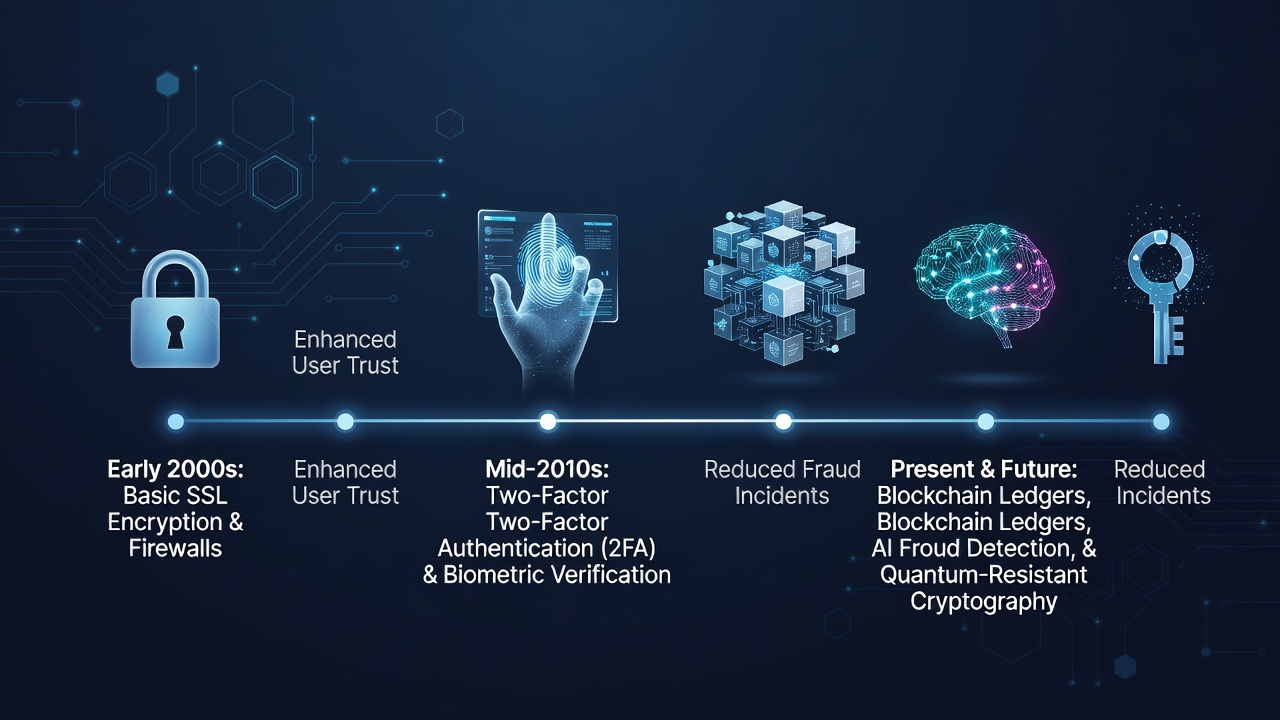
Digital betting and gaming platforms have undergone substantial changes in their security frameworks since the first commercial sites launched in the mid-1990s, and observers note that each major technological shift addressed specific vulnerabilities while expanding user protections. Early operators relied primarily on basic SSL certificates to encrypt data transmissions between players and servers, yet these measures proved insufficient against increasingly sophisticated attacks that targeted stored customer records and financial details.
Encryption Standards and Their Evolution
By the early 2000s, research from the National Institute of Standards and Technology had established stronger encryption protocols such as AES-256, and platform operators adopted these standards to protect sensitive account information during both transmission and storage. Data indicates that the transition to these algorithms reduced successful interception attempts significantly because they required exponentially more computational power to break compared with earlier methods like DES.
Payment processing presented another challenge, so developers integrated tokenization systems that replaced actual card numbers with unique identifiers, and this approach limited exposure even when a breach occurred at the merchant level. Industry reports show that PCI DSS compliance became mandatory for most licensed operators, which forced regular audits and hardware upgrades across the sector.
Authentication and Access Controls
Multi-factor authentication emerged as a standard requirement around 2010, combining something the user knows with something they possess or a biometric element, while researchers documented a sharp decline in account takeover incidents following widespread implementation. Biometric verification, including fingerprint and facial recognition through mobile devices, further strengthened login processes because these methods tied access to physical characteristics that proved difficult to replicate remotely.
Artificial Intelligence and Real-Time Monitoring
Around 2018, artificial intelligence systems began analyzing transaction patterns and betting behavior in real time to flag potential fraud or problem gambling indicators, and figures from regulatory bodies in multiple jurisdictions reveal that automated detection caught suspicious activity faster than manual reviews alone. Machine learning models trained on historical breach data learned to identify anomalies such as rapid withdrawals from newly created accounts or unusual device fingerprint changes, which allowed platforms to trigger additional verification steps automatically.

By June 2026, several major operators had integrated quantum-resistant cryptographic algorithms into their core infrastructure in anticipation of future computing threats, and this proactive step built on earlier NIST guidelines that highlighted the need for post-quantum security measures. Distributed ledger technology also gained traction for recording game outcomes and financial settlements because blockchain's immutable nature provided verifiable audit trails that satisfied both regulators and players.
Regulatory Technology and Compliance Automation
RegTech solutions automated compliance checks across different licensing jurisdictions, while software continuously scanned for updates to data protection rules and adjusted internal policies accordingly. European operators aligned their systems with GDPR requirements that mandated explicit consent for data processing and gave users the right to request deletion of personal information, and similar frameworks in other regions prompted comparable technical adaptations.
Cloud-based security platforms offered scalable protection against distributed denial-of-service attacks that had previously disrupted service during major sporting events, and providers implemented traffic filtering at multiple network layers to maintain uptime. Penetration testing became routine, with independent firms conducting simulated attacks to identify weaknesses before malicious actors could exploit them.
Future Directions and Ongoing Developments
Zero-trust architecture principles started appearing in platform designs by 2024, requiring continuous verification of every access request regardless of network location, and this model reduced the risk of lateral movement within systems following an initial compromise. Secure enclaves and hardware-based trusted execution environments further isolated critical processes such as random number generation for games, ensuring that even compromised operating systems could not alter outcomes.
Those who monitor the sector observe that collaboration between operators, technology vendors, and academic researchers has accelerated the adoption of these layered defenses, creating environments where security measures operate transparently yet effectively behind the user interface. Data from cross-border industry associations continues to track how these cumulative advancements correlate with lower reported incident rates across licensed markets.
Conclusion
The progression from basic encryption to integrated AI monitoring, blockchain verification, and quantum-resistant protocols illustrates a sustained response to emerging threats in digital betting and gaming. Each advancement addressed gaps exposed by previous incidents, and ongoing refinements suggest that security will remain a core component of platform architecture as technology continues to evolve.