Verifying Fair Play: Algorithmic Audits in Regulated Digital Wagering Systems
Ulrich Perry · Aug 14, 2026
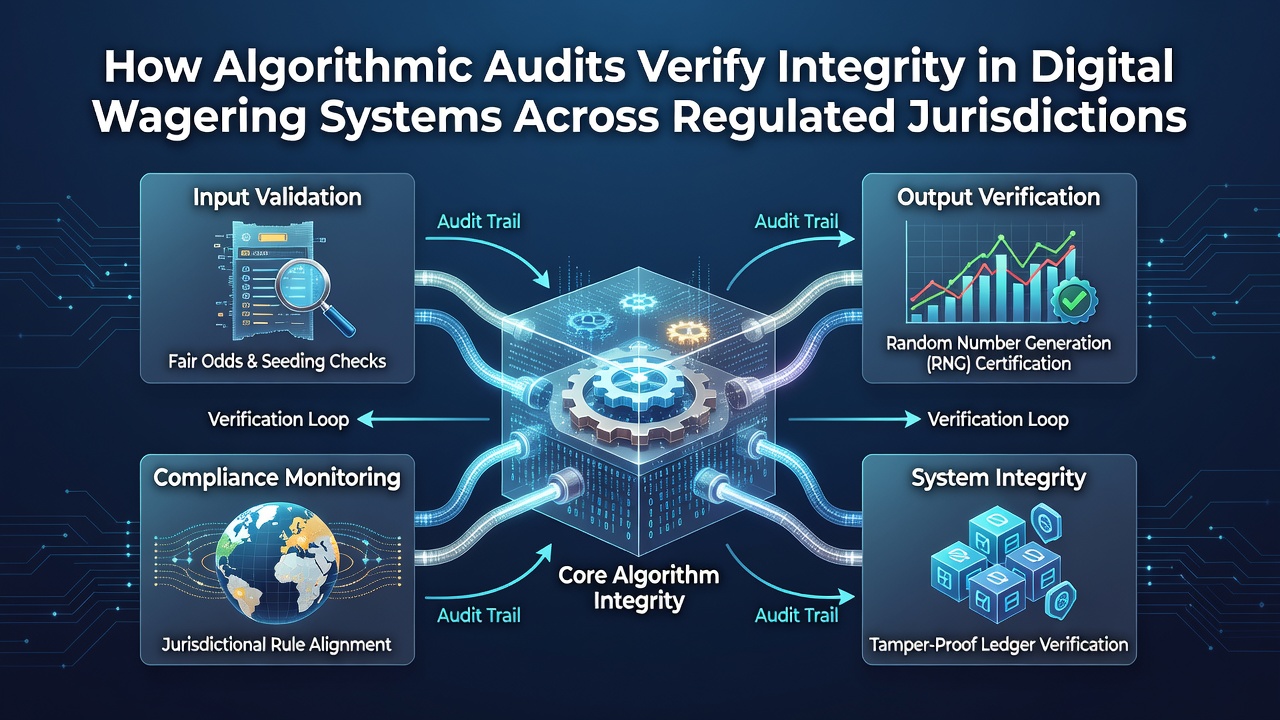
Verifying Fair Play: Algorithmic Audits in Regulated Digital Wagering Systems
Algorithmic audits examine the software foundations of digital wagering systems to confirm that random number generators produce unpredictable outcomes, transaction logs remain accurate, and player data stays secure across multiple regulatory environments. These evaluations rely on mathematical verification methods, code inspection protocols, and ongoing monitoring tools that detect deviations from established fairness standards. Regulators in various jurisdictions require such audits before licensing operators and at regular intervals afterward, creating a framework that ties technical compliance directly to operational permissions.
Core Mechanisms Behind Algorithmic Verification
Independent testing laboratories apply statistical sampling techniques to random number generators, running millions of simulated outcomes to measure distribution uniformity against theoretical expectations. When results fall within acceptable deviation thresholds, auditors certify the generator for live deployment, yet they continue periodic re-evaluations to catch any drift introduced by software updates. Transaction integrity checks trace every wager, payout, and balance adjustment through cryptographic hashing, allowing auditors to reconstruct complete event chains and identify discrepancies that might indicate manipulation attempts.
Access control audits review permission hierarchies within backend systems, confirming that only authorized personnel can modify game parameters or financial records. Machine learning components sometimes assist in flagging anomalous betting patterns that warrant deeper human review, though final determinations rest with human analysts who cross-reference algorithmic alerts against documented procedures. Data from these processes feeds into centralized compliance dashboards that regulators monitor remotely, reducing the need for constant on-site presence while maintaining oversight.
Regional Implementation Differences
In the United States, state-level bodies such as the Nevada Gaming Control Board mandate annual third-party audits that cover both land-based and online platforms, with additional requirements for real-time reporting of any RNG anomalies detected during live operation. New Jersey's Division of Gaming Enforcement supplements these checks with continuous data feeds that allow auditors to compare live game outcomes against certified baselines on a daily basis. Across the European Union, frameworks vary by member state yet commonly require certification from accredited labs before market entry, followed by quarterly integrity reports that detail any code changes or parameter adjustments.
Canadian provinces including Ontario enforce similar standards through the Alcohol and Gaming Commission, where algorithmic audits must demonstrate compliance with both fairness metrics and responsible gambling safeguards such as session time limits. Australian regulators focus on server-side integrity and cross-border data flows, requiring operators to maintain auditable logs that remain accessible to authorities even when systems reside in offshore data centers. These variations reflect local priorities while sharing core technical requirements around verifiable randomness and tamper-evident record keeping.

Continuous Monitoring and Update Protocols
Many jurisdictions now require live monitoring integrations that stream anonymized game data to regulatory portals, enabling automated alerts when statistical outliers exceed predefined thresholds. Software updates undergo pre-deployment review cycles that mirror initial certification processes, ensuring that patches or feature additions do not compromise previously validated components. When operators introduce new game titles, full RNG certification repeats before public release, while minor balance adjustments may qualify for expedited checks if they fall within approved parameter ranges.
Researchers at academic institutions have documented how blockchain-based logging systems enhance audit trails in certain markets, creating immutable records that auditors can query without relying solely on operator-provided data. Such approaches reduce opportunities for selective reporting and allow faster dispute resolution when players question specific outcomes. As of August 2026, several North American and European regulators have begun pilot programs that combine traditional statistical testing with cryptographic verification methods to further strengthen chain-of-custody assurances for digital wagering records.
Collaboration Between Labs, Operators, and Regulators
Testing laboratories maintain independence through contractual structures that prevent financial ties to the operators they evaluate, while regulators approve lab accreditation based on demonstrated technical capabilities and ethical standards. Operators receive detailed reports outlining any deficiencies along with remediation timelines, and failure to address issues can trigger license suspension. Joint working groups across jurisdictions occasionally share best practices and emerging threat profiles, helping align audit criteria even when specific rules differ.
Training programs for auditors emphasize both technical proficiency in statistical methods and familiarity with evolving regulatory language, ensuring consistent application of standards across different cultural and legal contexts. These collaborative structures support the scalability of audit processes as digital wagering markets expand into new regions and incorporate increasingly complex game mechanics.
Conclusion
Algorithmic audits form a structured verification layer that connects software behavior to regulatory compliance across diverse jurisdictions. Through statistical testing, cryptographic logging, continuous monitoring, adn coordinated oversight, these processes confirm that digital wagering systems operate within defined integrity parameters while adapting to technological and market changes. The resulting framework supports consistent enforcement regardless of geographic differences in specific rules or administrative structures.